How Septic Services Help Protect Local Groundwater


Groundwater is easy to ignore because it stays out of sight. It sits below lawns, gravel driveways, woods, crop fields, and quiet rural roads, moving slowly through layers of soil and rock. Yet for millions of households, it is the water that comes up through the well tap every morning. It is also the water that feeds streams, wetlands, and small ponds during dry stretches. When a septic system works properly, most people never think about that connection. When it does not, the link becomes painfully clear.
That is where septic services matter. The phrase sounds routine, almost administrative, but the work behind it has real environmental weight. Inspection, pumping, maintenance, repairs, and system upgrades all help keep wastewater where it belongs and prevent contaminants from migrating into the ground. A healthy septic system treats wastewater on site through a combination of settling, microbial breakdown, and soil filtration. A neglected one can push nutrients, bacteria, viruses, and household chemicals into the subsurface, where cleanup is difficult, expensive, and sometimes impossible.
People often picture groundwater contamination as something caused by factories, fuel spills, or old dumps. Those sources certainly matter. But in many suburban fringe areas, lake communities, and rural neighborhoods, the more common threat is much smaller and more ordinary: one overloaded septic system after another, year after year, on lots that were never ideal for them in the first place.
The hidden path from drain to aquifer
A septic system is simple in concept. Wastewater from sinks, toilets, showers, and laundry leaves the house and enters a septic tank. Solids settle to the bottom, fats and grease float to the top, and the partially clarified liquid in the middle flows out to a drainfield. There, the soil does the final treatment. That last step is the reason soil conditions matter so much. The drainfield is not just a place to dispose of water. It is part of the treatment process.
When the system is sized properly, used within its capacity, and maintained on schedule, the soil removes a remarkable amount of contamination. Pathogens die off over time. Nutrients are absorbed, transformed, or held in place. Fine particles are strained out. But that natural treatment has limits. If too much water enters too quickly, if the tank is full of accumulated sludge, if the drainfield is compacted or saturated, or if the site has poor soils and a high water table, the system can stop treating effectively.
At that point, wastewater may rise to the surface, back up into the house, or move downward and sideways before receiving enough treatment. That is when local groundwater becomes vulnerable. Nitrate is one of the most persistent concerns because it dissolves easily in water and can travel significant distances. Unlike some contaminants that bind to soil, nitrate often keeps moving. In areas where homes rely on shallow wells, especially older private wells, that movement becomes a public health issue.
I have seen neighborhoods where homeowners assumed their water was clean because it looked clean. Clear water is no guarantee. Many well contamination problems show up with no visible warning. No odor, no cloudiness, no odd taste. The first sign may be a failed water test, recurring stomach illness, or a home sale inspection that uncovers elevated nitrates or coliform bacteria. By then, the contamination may have been building for years.
What septic services actually do
A lot of homeowners hear "septic services" and think only of pumping the tank every few years. Pumping is important, but it is only one part of the picture. Good septic service work begins with understanding how the system is functioning as a whole, not just how full the tank is.
An experienced technician does more than empty a tank and leave. They look at sludge and scum levels, inspect baffles, check for signs of root intrusion, verify flow patterns, and look for evidence that solids may be escaping into the drainfield. They often spot early trouble that the homeowner has not noticed yet, such as a toilet running continuously, a filter clogged with lint and grease, or soft spots developing over the field. Those small observations can prevent large failures.
When septic professionals inspect a system before a property transfer, they often uncover mismatches between the house and the treatment capacity. A three bedroom cabin may have become a full-time four bedroom residence over the years. A seasonal lake house may now host frequent guests, extra laundry, and longer showers. The septic system did not expand just because the living pattern changed. Groundwater risk rises when water use outgrows the original design assumptions.
Repairs matter just as much as routine maintenance. A cracked lid can let surface water pour into the tank during storms, overloading the system. A broken outlet baffle can allow solids into the drainfield, shortening its life. A distribution box that has gone out of level can overload one section of the field while starving another. None of these issues sound dramatic at first glance, yet each one can reduce treatment efficiency and increase the chance that poorly treated wastewater reaches the surrounding soil and water table.
Why pumping on schedule protects water quality
Pumping removes the solids that naturally build up in a septic tank. If those solids are left too long, they begin to take up space that wastewater needs for settling. Once settling is compromised, more suspended material leaves the tank and enters the drainfield. That is bad for the field and bad for groundwater.
Drainfields fail slowly before they fail obviously. The soil around the trenches can become clogged with a heavy biological layer and fine solids. Some clogging is normal and part of treatment. Too much clogging, however, prevents water from infiltrating at the intended rate. The liquid then finds easier paths, often with less treatment. In sandy soils, that can mean rapid movement downward. In tight soils, it can mean surfacing or lateral seepage.
The right pumping interval depends on tank size, household size, water use, and what goes down the drain. A lightly used vacation property may go several years between pump-outs. A busy family home with a smaller tank may need attention much sooner. There is no universal calendar that fits every site. That is another reason generic advice falls short. Septic services that include measurement and inspection are more useful than a one-size-fits-all recommendation.
A common mistake is waiting for symptoms. By the time toilets gurgle or sewage odors appear outdoors, the system may already be in distress. That delay matters because restoring a tank is cheap compared with replacing a drainfield. A pump-out might cost a few hundred dollars depending on region and tank size. A new drainfield, engineered replacement, or advanced treatment upgrade can run into the thousands or tens of thousands. More important, once contaminated water has moved into an aquifer, the financial cost is only part of the problem.
Groundwater threats are not all the same
Not every septic-related groundwater problem looks alike. The contaminants and the travel patterns depend on local geology, climate, lot layout, and system design. In coarse sandy soils, water may move quickly, which can be a benefit for dispersal but a challenge for treatment if separation distances are inadequate. In clay-rich soils, movement is slower, but ponding and surface breakout become more likely. In fractured bedrock areas, wastewater can bypass the natural filtering action of soil altogether and move through cracks more directly than people expect.
That variability is why good septic services are local by nature. A contractor working in glacial till country develops a different sense of risk than one working in coastal sands or shallow limestone terrain. The basic principles do not change, but the warning signs do. In some areas, wet years expose weak systems. In others, drought changes soil behavior and encourages homeowners to ignore the problem until heavy rains return.
Seasonality also matters. Spring thaw can saturate soils and reduce the drainfield's ability to accept wastewater. Holiday gatherings can temporarily double water use in a house built for two full-time residents. A system may limp through average conditions and then tip into failure during those peaks. Skilled technicians notice patterns like this. They ask how many people live in the home, whether there is a garbage disposal, how often laundry is done, and whether sump pumps or roof drains have ever been tied into the system by mistake.
The role of inspections in prevention
Inspection is where many groundwater problems are prevented before they become expensive or irreversible. That is true for homeowners who stay in place for decades and for buyers evaluating a property. A proper inspection goes beyond checking whether the toilets flush.
Technicians often assess tank integrity, outlet condition, effluent filter performance, and signs of previous overflow or backup. They may probe the drainfield area, measure liquid levels, and look for stress indicators such as lush strips of grass over trenches during dry weather. In some jurisdictions, dye testing or camera work may be used selectively, though those methods have limits and should not replace a full functional assessment.
What makes inspections valuable is timing. Catching solids carryover early can save a field. Catching unauthorized additions to the home can prompt a conversation about capacity before a problem surfaces in the neighbor's well. Catching a failed pump in a pressure-dosed system can prevent hydraulic overload. Each of those outcomes protects groundwater by keeping treatment where it is supposed to happen, in the system and the soil, rather than in the surrounding environment.
One property owner I once spoke with had ignored slow drains for months because the issue came and went. He assumed it was a plumbing nuisance. During inspection, the technician found the septic tank was overdue for pumping and the outlet filter was nearly blocked. The field had not failed yet, but it was being stressed. After service, the homeowner admitted he had been close to planting trees over the drainfield because the area looked underused. That would have created a second problem through root invasion. A simple service call changed the course before either issue had a chance to affect the well downhill from the house.
Small habits, big consequences
Homeowner behavior influences septic performance more than many people realize. The system is passive, but it responds to everything sent through it. Water use spikes, harsh chemicals, grease, wipes, and non-biodegradable products all change how the tank and field function over time.
Septic services often include a practical education component, and that part should not be underestimated. Many service calls turn into short on-site lessons. Homeowners learn that "flushable" wipes are often anything but, that leaking toilets can send hundreds of extra gallons a day into the system, and that antimicrobial products do not belong in constant heavy rotation if they disrupt the biological processes in the tank. They also learn that additives marketed as miracle fixes rarely solve structural or hydraulic problems.
Here are the maintenance habits that usually provide the strongest return:
- Pump the tank on a schedule based on actual household use, not guesswork.
- Fix leaks promptly, especially running toilets and dripping fixtures.
- Keep vehicles, sheds, and heavy equipment off the drainfield.
- Direct roof runoff and surface drainage away from the septic area.
- Test private well water regularly if the property depends on groundwater.
None of these steps are glamorous, but each one reduces the chance that wastewater will move through the soil without adequate treatment.
When older systems need more than maintenance
Routine service can preserve a good system for a long time, but it cannot make an obsolete or poorly sited system perform like a modern one. Many groundwater concerns trace back to age and design limits rather than simple neglect. Older systems may have been installed before current separation standards, before detailed site evaluation was common, or before year-round occupancy became typical.
A tank that is too small for the household can be pumped diligently and still underperform. A drainfield in seasonally wet soil may function acceptably in dry years and then threaten groundwater during prolonged wet periods. A cesspool or straight-pipe discharge, still found in some older properties, presents an obvious water quality hazard and usually needs replacement rather than patchwork.
This is where septic services overlap with planning and regulation. Contractors, inspectors, engineers, and local health departments all play roles. The best outcomes usually happen when those parties work with realistic expectations. Sometimes the right answer is a repair. Sometimes it is a full replacement. Sometimes it is an advanced treatment unit because lot size, shoreline setbacks, or soil limitations leave few alternatives.
That can be a difficult conversation for property owners. No one enjoys hearing that a system upgrade may cost more than a kitchen remodel. Yet the trade-off is not abstract. In a neighborhood dependent on private wells, one failing system rarely affects only one household. Groundwater ignores property lines.
Near lakes, streams, and coastal areas, the stakes rise
Septic systems close to water bodies deserve special attention because groundwater often acts as the delivery path between the drainfield and the shoreline. A system may seem stable on land while still contributing nutrients to a lake or estuary through subsurface flow. The result might not be obvious as sewage odor or standing effluent. Instead, the symptoms can appear in the water body itself as algae growth, weed proliferation, or declining clarity.
Nitrogen is especially important in coastal settings, where excess loading can fuel estuarine degradation. Phosphorus can be a major concern for freshwater lakes. Bacterial contamination also matters where people swim, fish, or draw drinking water nearby. Septic services in these areas often require a higher level of vigilance because the environmental buffer is smaller and the consequences spread faster.
Homeowners sometimes resist pumping or upgrades because "the system still works." That phrase can be misleading. A system can still dispose of water while doing a poor job of treatment. From a groundwater perspective, the question is not only whether wastewater leaves the house without backing up. The question is how effectively the system removes contaminants before they reach the subsurface water moving toward a well, ditch, creek, or shoreline.
Heavy rain, flooding, and climate pressure
Weather patterns are putting more stress on wastewater systems in many regions. More intense rain events can saturate soils, raise seasonal water tables, and send stormwater into places it does not belong. Older tanks with damaged lids or risers are especially vulnerable to infiltration. Once too much clean water enters the system, treatment time drops and the drainfield receives more volume than it was designed to handle.
Flooding introduces another set of problems. A submerged drainfield cannot treat wastewater properly. In some cases, floodwaters can carry contaminants from failing systems across yards and into nearby ditches and streams. After a flood, inspections become essential because structural damage is not always visible from the surface. Tanks may shift, pipes can separate, and distribution components can fill with silt.
This is one reason proactive septic services are becoming more important, not less. A system installed under one set of assumptions may now be operating under another. More frequent wet periods, more pavement on surrounding lots, and larger households all add pressure. Maintenance plans that worked twenty years ago may no longer be sufficient.
What local communities gain from good septic management
When septic systems are maintained across a community, the benefits show up in several places at once. Private wells are less likely to test positive for bacteria or elevated nitrate. Surface waters stay cleaner. Property values hold up better because wastewater failures are not becoming a neighborhood pattern. Local governments face fewer public health complaints and emergency replacement disputes.
The gains are practical, not theoretical. Well treatment systems, bottled water, and emergency repairs are expensive. So are shoreline restoration efforts and failed real estate transactions. By contrast, regular septic services spread costs over time and catch problems while options are still https://maps.app.goo.gl/wVwDDendX5XK3hBt7 manageable.
A community does not need every property owner to be an expert in wastewater treatment. It does need a culture that treats septic care as infrastructure, not as an afterthought. Roads get resurfaced. Roofs get replaced. Furnaces get serviced. Septic systems deserve the same mindset because they protect something just as fundamental: the water below our feet.
Choosing service providers who understand groundwater risk
Not all septic work is equal. The best providers combine mechanical know-how with site judgment. They pay attention to soil, drainage, home occupancy, and the age of the installation. They explain what they are seeing instead of offering vague reassurances. They document conditions clearly, note warning signs, and avoid promising miracle fixes for systems that are near the end of their useful life.
When homeowners ask what to look for in a provider, I usually suggest a short common-sense filter:
- Choose someone who inspects as well as pumps, and explains the condition of the tank and components.
- Ask whether they are familiar with local soils, water table issues, and permitting requirements.
- Be cautious with anyone who pushes additives as a substitute for maintenance or repair.
- Request records, dates, and recommendations in writing.
- If a major failure is suspected, involve the appropriate local authority or designer early.
That kind of due diligence helps homeowners make decisions based on system health rather than wishful thinking.
The quiet value of routine work
Most groundwater protection does not happen through dramatic interventions. It happens through ordinary, repeated actions carried out before there is a crisis. A tank gets pumped on time. A broken baffle gets replaced. A leaking toilet gets fixed. A drainfield is kept clear of traffic and runoff. A private well is tested before someone gets sick. None of that makes headlines, but it is exactly how local water quality is preserved.
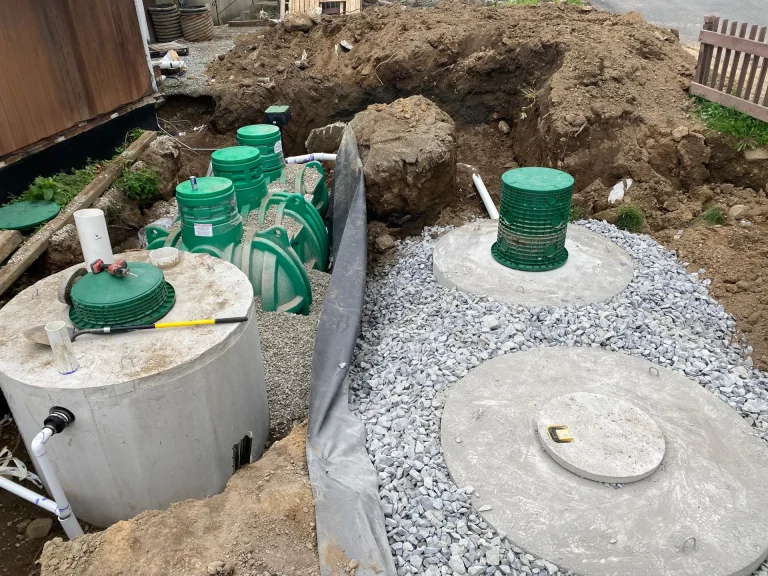
Septic services sit at the center of that quiet work. They turn an invisible risk into something visible enough to manage. They give homeowners a read on system condition, help communities reduce contamination pressure, and keep natural soil treatment functioning as intended. In places where groundwater is the drinking water supply, that is not a minor household chore. It is part of environmental stewardship, public health protection, and responsible property ownership, all at once.
The strongest septic systems are rarely the ones that get the most attention after they fail. They are the ones that receive regular, competent service long before anyone notices a problem. That is how local groundwater stays clean enough to keep doing its job, year after year, beneath the places people live.
Excavating New Jersey LLC
Address: 406 County Rd 565, Wantage, NJ 07461
Phone number: +19737914284
FAQ About Septic Services
What is the average cost to get a septic tank emptied?
Emptying a septic tank costs between $290 and $560 on average, with most homeowners paying about $420. Prices vary based on tank size.
What is septic service?
Septic service inspects, pumps, cleans, and maintains a septic tank. A septic tank is a large, underground container that collects and treats wastewater from your home. Over time, sludge, scum, and other debris, like hair and solids, can build up in your tank and clog your drain field.
How often should you have a septic tank serviced?
A standard septic tank should be inspected every 1 to 3 years and pumped every 3 to 5 years. However, the exact schedule depends on your tank's capacity, household size, and daily water usage.